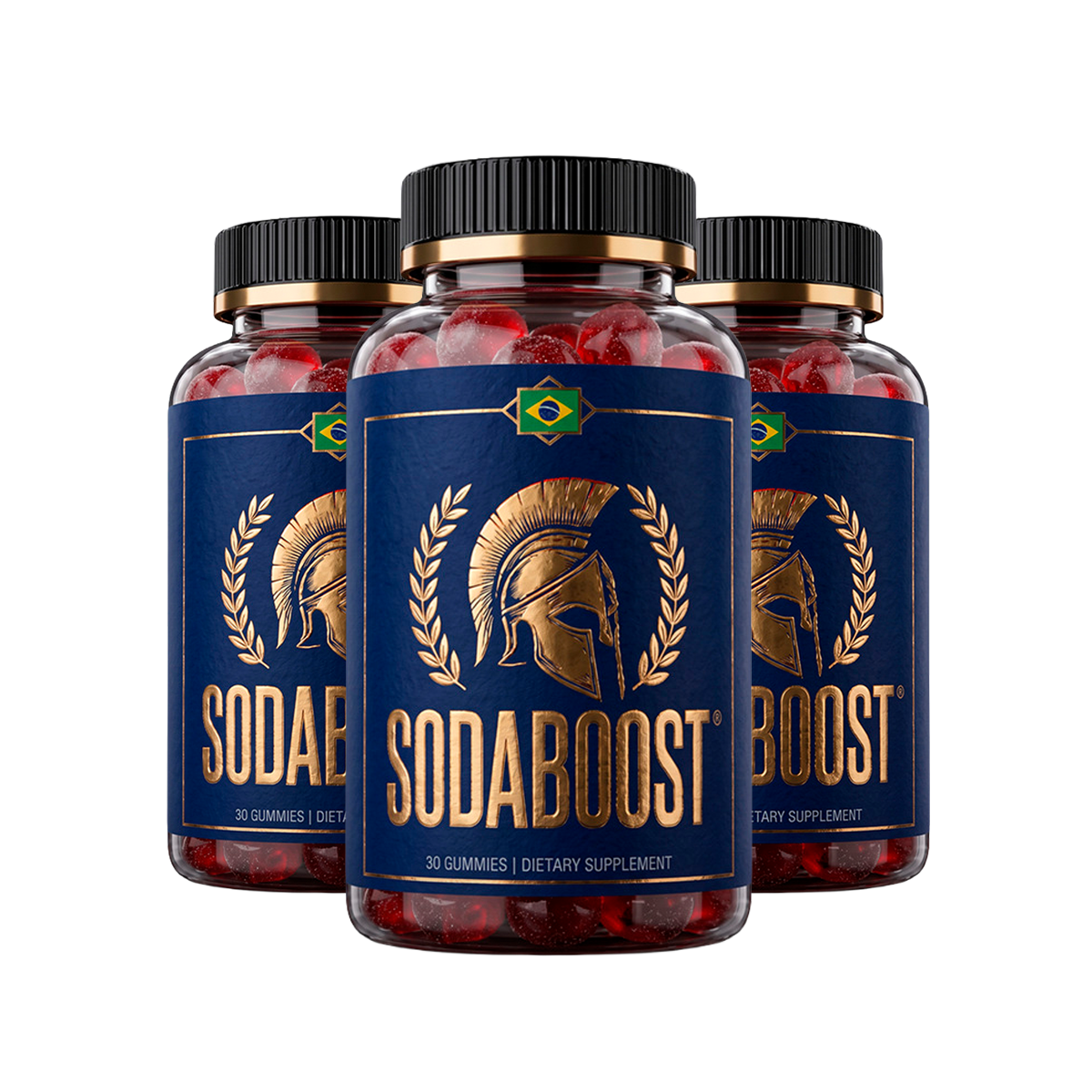
A Research-Based Look at the SodaBoost Boost Gummy for Everyday Energy
SodaBoost boost is a once-daily chewable dietary supplement for adult men. SodaBoost places an 82 mg proprietary blend of nine ingredients, including Muira Puama, Catuaba, Maca, ashwagandha and green tea extract, beside 5 mg of caffeine. This page reviews the published science on each SodaBoost ingredient.
SodaBoost is a men's gummy supplement taken once daily. The SodaBoost label lists an 82 mg proprietary blend of nine ingredients and 5 mg of caffeine. SodaBoost is made in the USA with globally sourced ingredients in a GMP facility, per the brand's launch announcements.
Feature
SodaBoost Detail
What It Means
Product type
Dietary supplement gummy
Not a drug; not intended to treat disease
Target user
Adult men
Positioned for energy and vitality routines
Serving
1 gummy per day
Simple routine, no pills or water needed
Proprietary blend
82 mg, nine ingredients
Individual amounts are not itemized
Caffeine
5 mg
Roughly 5% of a cup of coffee
Named botanicals
Muira Puama, Catuaba, Maca, ashwagandha, green tea
Traditional-use herbs with limited human trials
Distributor
Instituto Experience, Lakeland, Florida
Listed on the label panel
What Is SodaBoost and Who Is It Made For?
SodaBoost is a chewable dietary supplement made for adult men who want a short daily routine. The FDA classifies products like SodaBoost as dietary supplements, which means SodaBoost is regulated as food rather than as medicine.
The SodaBoost gummy pairs three Brazilian and Peruvian botanicals, Muira Puama, Catuaba and Maca, with ashwagandha, green tea extract and caffeine. Many shoppers search for "Soda Boost" as two words; the SodaBoost label prints it as one.
The brand describes SodaBoost as a complement to nutrition, sleep and exercise. That framing matters: NCCIH explains that herbal products vary in quality and that "natural" does not automatically mean safe or effective.
Why Does SodaBoost Stand Out From Other Energy Supplements?
SodaBoost stands out for its low-stimulant design. With only 5 mg of caffeine per gummy, SodaBoost relies on botanicals rather than a large stimulant dose, unlike energy drinks and shots that deliver 80 to 300 mg per serving.
01
Low caffeine
SodaBoost contains 5 mg, so jitters and sleep disruption are less likely than with high-caffeine products.
02
Gummy format
One SodaBoost gummy needs no water and no pill counting, which supports consistency.
03
Botanical lineup
SodaBoost combines Amazonian and Andean herbs with an adaptogen rather than relying on one compound.
04
Label transparency
SodaBoost discloses its ingredient names, though doses within the blend are not itemized.
Component by component
What Are the SodaBoost Ingredients and Why Are They There?
The SodaBoost ingredients are Muira Puama, Catuaba, Maca, ashwagandha, green tea extract and caffeine, among nine blend components. Each SodaBoost ingredient has a traditional-use history, but studies examined each ingredient alone, not the finished SodaBoost gummy.
Important context: nine ingredients share 82 mg, an average near 9 mg each. Published human trials of maca and ashwagandha typically use hundreds to thousands of milligrams, so SodaBoost doses are far smaller than studied doses.
Muira Puama in SodaBoost
Muira Puama (Ptychopetalum olacoides) is a shrub from the Brazilian Amazon, sometimes called "potency wood."
Why needed
It is the signature traditional ingredient for male vitality in Brazilian herbal medicine, so the SodaBoost brand uses it as its anchor botanical.
Evidence
Human research is sparse and mostly small, older studies on PubMed; animal work suggests effects on nervous-system signaling.
Limit
Dose inside SodaBoost is undisclosed and likely small.
Verdict: Plausible traditional fit; evidence is preliminary, not proof of effect at SodaBoost's dose.
Catuaba in SodaBoost
Catuaba refers to bark preparations from Brazilian trees such as Trichilia catigua and Erythroxylum catuaba.
Why needed
Traditionally paired with Muira Puama as a general tonic; SodaBoost follows that classic pairing.
Verdict: Best evidence of the botanicals, but the studied dose far exceeds what a gummy can hold.
Ashwagandha in SodaBoost
Ashwagandha (Withania somnifera) is an Ayurvedic adaptogen, a herb traditionally used to support stress resilience.
Why needed
SodaBoost includes it to address the stress and fatigue side of daily energy.
Evidence
NCCIH summarizes small trials suggesting benefits for stress and sleep, with rare reports of liver injury. Trial extracts commonly supply 300 to 600 mg per day.
Limit
Avoid if pregnant, on thyroid, sedative or immunosuppressant medication, or with liver disease unless a clinician agrees.
Verdict: Credible ingredient with real data, but SodaBoost's dose is a fraction of trial amounts.
Green Tea Extract in SodaBoost
Green tea extract supplies catechins such as EGCG and a small amount of natural caffeine and L-theanine-related compounds.
Why needed
It adds a mild antioxidant and alertness component to the SodaBoost formula.
Evidence
NCCIH notes that brewed tea is generally safe, while concentrated extracts have been linked to rare liver problems at high doses.
Limit
At SodaBoost's tiny dose, the liver concern is low but the benefit is also modest.
Verdict: Safe-leaning at this dose; contributes more to formula story than to measurable effect.
Caffeine in SodaBoost (5 mg)
Caffeine blocks adenosine receptors in the brain, which reduces drowsiness.
Why needed
It is the only SodaBoost ingredient with robust evidence for alertness, so the brand lists it separately.
5 mg is below the amount typically needed for a noticeable stimulant effect.
Verdict: Gentle by design; do not expect coffee-like stimulation from SodaBoost.
Mechanism
How Does SodaBoost Work in the Body?
SodaBoost works through several mild, overlapping pathways rather than one strong one. Caffeine reduces adenosine-driven tiredness, ashwagandha may moderate the stress response, and traditional botanicals like Muira Puama and Maca are used for vitality, though human proof for these remains limited.
Does SodaBoost Act on Alertness?
Yes, but gently. Adenosine accumulates through the day and promotes sleepiness; Mayo Clinic explains that caffeine blocks this signal. SodaBoost supplies only 5 mg, so the effect is subtle.
Does SodaBoost Act on Stress?
Ashwagandha is the SodaBoost component most linked to stress outcomes. Studies measured cortisol and perceived stress at doses far above what SodaBoost likely contains, so expect uncertainty.
Does SodaBoost Support Vitality?
Muira Puama, Catuaba and Maca are used traditionally for stamina and male wellbeing. The SodaBoost formula follows that tradition, not a proven clinical mechanism.
What Are the Pros and Cons of SodaBoost Boost?
The main SodaBoost pros are convenience, low caffeine and a traditional botanical lineup. The main SodaBoost cons are an undisclosed per-ingredient dose, limited human evidence for several botanicals and no clinical trial on the finished gummy.
SodaBoost Pros
One gummy daily, easy to maintain
Only 5 mg caffeine, low jitter risk
Ingredient names disclosed on label
Made in a GMP facility in the USA
Official site sales reduce counterfeit risk
SodaBoost Cons
Proprietary blend hides exact doses
82 mg shared by nine ingredients is small
No trial on SodaBoost itself
Not suitable for everyone (see safety)
Results, if any, vary by person
Where Can You Buy SodaBoost and What Does It Cost?
SodaBoost is sold through the brand's official website, accessible via the SodaBoost order page. Buying SodaBoost from the official source helps avoid counterfeit or expired products, and current SodaBoost pricing and bundle options are shown there.
Prices and promotions change, so this page does not list a fixed figure. Before ordering SodaBoost, confirm the refund terms, shipping details and the full Supplement Facts panel. Consult the FDA guidance on buying supplements online for red flags.
What Are the SodaBoost Side Effects and Safety Concerns?
SodaBoost side effects have not been studied directly. Ingredient-level concerns include stomach upset or drowsiness from ashwagandha, sleep disruption from caffeine and rare liver effects from concentrated green tea extract. SodaBoost is for adults only.
Ingredient
Possible Concern
Who Should Be Careful
Ashwagandha
GI upset, drowsiness, rare liver injury
Liver or thyroid conditions, pregnancy, sedative users
Caffeine
Sleep loss, palpitations at higher intake
Heart rhythm issues, anxiety, high total intake
Green tea extract
Liver stress at high doses
Existing liver disease
Maca, Muira Puama, Catuaba
Limited safety data
Anyone on prescription medication
Speak with a clinician before starting SodaBoost, especially if you take prescription drugs, have a chronic condition or are over 65. Stop and seek care if you notice jaundice, severe abdominal pain or an allergic reaction. The NIH Office of Dietary Supplements offers a consumer guide to supplement safety.
SodaBoost FAQs: What Do Readers Ask Most?
What is SodaBoost?
What is SodaBoost? SodaBoost is a once-daily chewable gummy supplement for adult men, combining an 82 mg proprietary blend of nine ingredients with 5 mg of caffeine.
Is SodaBoost the same as Soda Boost?
Is SodaBoost the same as Soda Boost? Yes. The label prints one word, SodaBoost, while shoppers often type two words. Both refer to the same gummy.
How much caffeine does SodaBoost contain?
How much caffeine does SodaBoost contain? SodaBoost contains 5 mg per gummy, far below the roughly 95 mg in an 8-ounce cup of coffee.
Does SodaBoost have side effects?
Does SodaBoost have side effects? Direct data are lacking. Ingredient-level effects such as digestive upset or sleep disruption are possible, so consult a clinician before using SodaBoost.
How is SodaBoost taken?
How is SodaBoost taken? Chew one SodaBoost gummy once daily, following the directions on the label.
Where can I buy SodaBoost?
Where can I buy SodaBoost? SodaBoost is sold through its official website via the order page, the safest source for genuine product.
What Does Research Say About SodaBoost Ingredients?
No clinical trial has tested SodaBoost itself. Research exists on individual ingredients, mainly Maca, ashwagandha, green tea and caffeine, while Muira Puama and Catuaba have only preliminary evidence. Dose differences limit how far those findings apply to SodaBoost.
Bottom line: SodaBoost has a rational, tradition-based design, but the dose gap means readers should keep expectations modest and treat SodaBoost as a lifestyle add-on, not a treatment.
Where Can You Read More About SodaBoost Topics?
These trusted educational pages cover the ingredients and safety topics behind SodaBoost. They come from government and academic medical sources, which are the best places to verify any SodaBoost claim.
These statements have not been evaluated by the Food and Drug Administration. SodaBoost is not intended to diagnose, treat, cure or prevent any disease. This page is educational and not medical advice; consult a qualified healthcare professional before use. Information reflects public sources as of November 2026.